Problem Space — OMNI-Channel Experience
It took my colleagues and I almost 3 years to turn the buzzword "OMNI-channel" into a tangible digital platform.
Many people confuse "multi-channel" with "OMNI-channel," assuming both simply mean building a responsive web product accessible across devices. The reality is far wider. OMNI-Channel strategy aims to provide a 360-degree seamless customer experience across all service channels — typically call centers, retail stores, self-serve websites, and social media support. In my company, the scope is even larger: telesales, customer care, retail, credit ops, tech support, warehouse, and field technicians all needed to be part of one coherent system.
On top of that, the platform was also expected to reduce operation costs and improve service efficiency — consolidating 70+ legacy frontline tools into one, powered by modern technology.
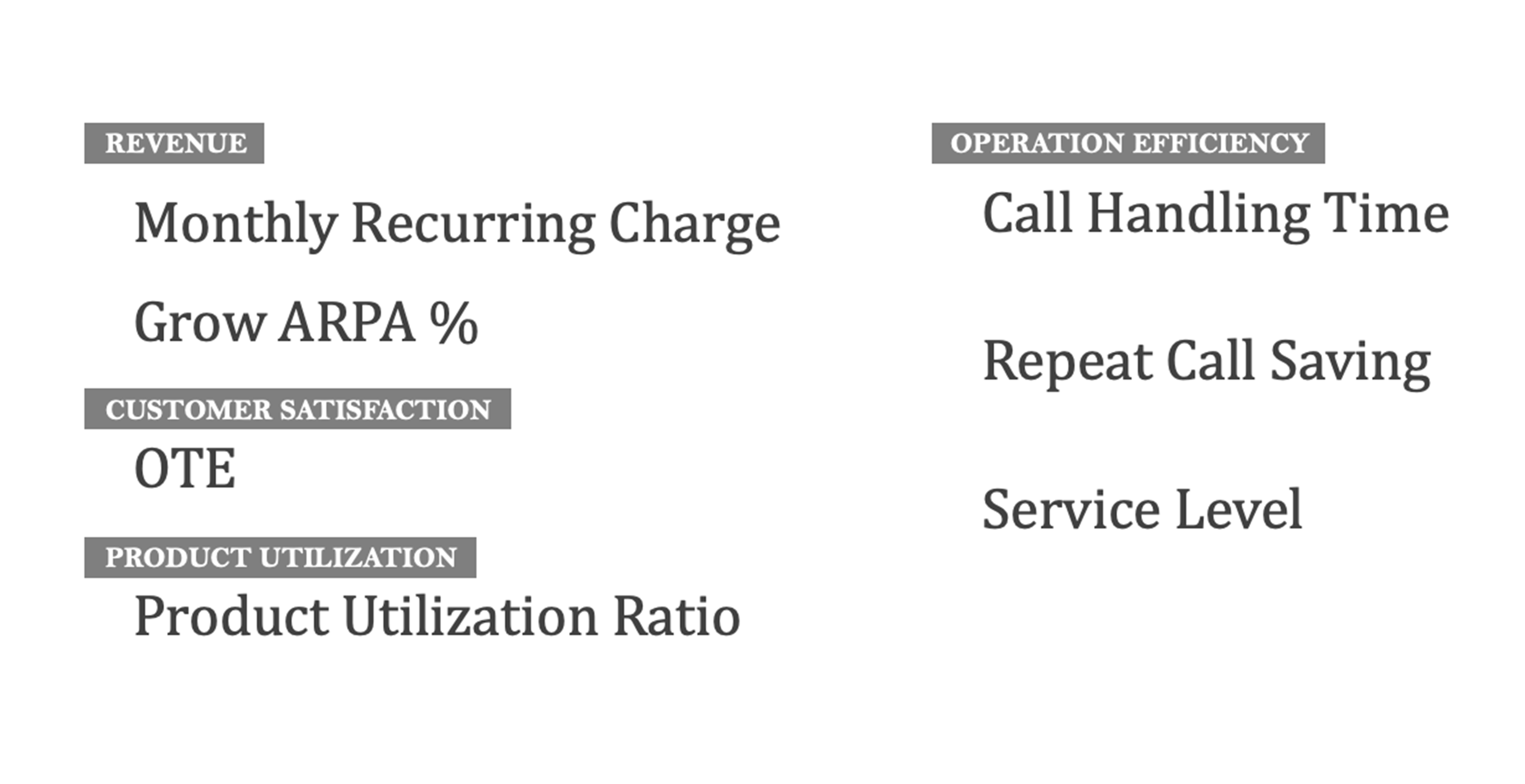
Product Vision
Based on years of vision interlocking with senior management and product teams, we created a North Star product vision across three perspectives: Business, Employee, and Customer.

User Groups
Reps — our primary users — work in different roles across various channels, follow different service flows, and contribute to business KPIs separately. In certain channels, Reps also have different permission setups: Team Managers, Retention Agents, and Regular Agents.
To build deep understanding of users' behaviors, expectations, and motivations, my team conducted extensive onsite and offsite research in partnership with the UX Research team.

Product Outcome
Before
Reps had to switch between 70+ tools. Their proficiency varied depending on training, which resulted in long service times, inconsistent information delivered to customers, and limited effectiveness in hitting sales targets.
After
Through sustained design leadership, the OMNI digital platform grew into a product with a well-defined experience strategy, cohesive design patterns, and dozens of function modules — expanding into multiple channels and dual-branded variants.

Experience Design Process
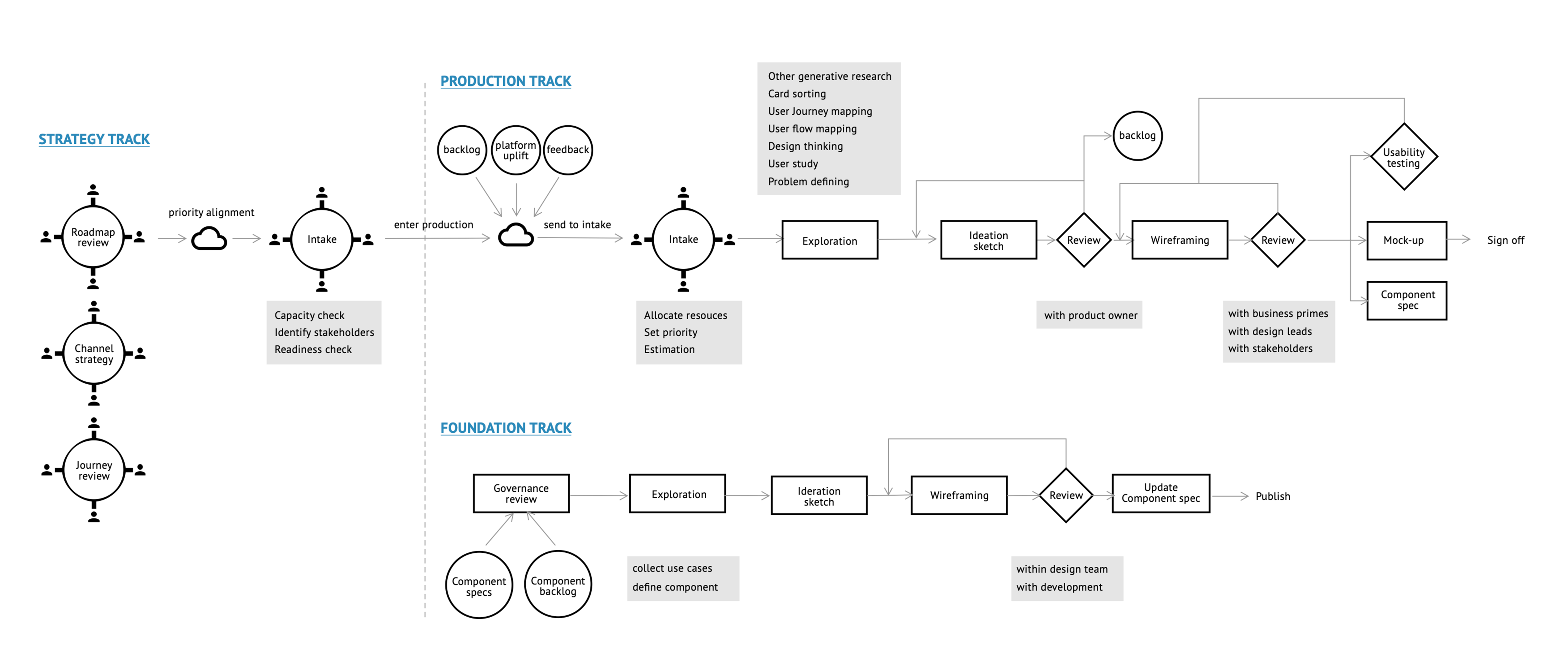
Like any organization that values user experience, my team continuously evolved our design process to fit the organizational setup. We segmented the overall process into three parallel tracks: Strategy, Production, and Foundation.
Production Track
Focuses on the User-Centered Design process — spanning requirement analysis, research and discovery, user study, ideation, wireframing, prototyping, and usability testing.
Strategy Track
Aims to place experience value on the table in earlier planning stages — new business models, products, and service procedures. As Design Manager, I joined board discussions on product roadmap, channel strategy, and journey envisioning to shape product direction and plan for resources. Initiatives aligned with leadership then entered the Production Track.
Foundation Track
Running in parallel with Production, this track focuses on building the organic foundation for the OMNI-Channel system at scale — most visibly through the Design System initiative.
Product System View
The OMNI-Channel platform is one product in two branded variants, distributed through multiple channel versions via configuration options. It consists of dozens of function modules — CRM, billing and payment, sales tools, offers, order inquiry, service changes, permission control, business intelligence, and more.
Together with the AI Chatbot and Knowledge Management platform, they form the full enterprise OMNI-channel system. The Design System serves as the backbone, allowing each product to evolve at its own pace while maintaining a holistic experience.
How the end-user experience is shaped by each product in the system:
The design team must identify both generic and channel-specific needs to solution accordingly.
We also need to see the organic connections between products and design for the holistic experience.

Information Architecture
IA Map
With 70+ tools to consolidate, the information architecture challenge was significant. Reps' varying tool proficiency and service knowledge — depending on training received — led to long service times, inconsistent information, and missed sales targets. The IA map provided the blueprint to consolidate and simplify.

Think Holistically, Build at Scale
One of my major roles was overseeing the platform experience design end-to-end. Keeping a holistic view while every piece of the system is moving is genuinely hard — advanced business logic, industry domain knowledge, and diverse stakeholder interests all add to the complexity.
Regular roadmap discussions with Product Owners were essential for ensuring my team understood the future state and feature iteration plans, so design decisions were always made with the bigger picture in mind.
Foundation Design — Design System
We are a future-envisioning team. We wanted a foundation that lets the system and team grow continuously and address imperfections with low effort — which led us to the Design System initiative.
We built a DSM construct using the atomic approach alongside our page and feature delivery, alongside a defined process for intaking, evolving, and publishing components. The focus was positioning the Design System at the center — interacting with numerous concurrent projects. Next steps: governance on interaction patterns and embedded logic within each component.

Experience Design Showcase
With the overarching platform context in place, my team delivered dozens of experience design projects over three years. Three projects below showcase the actual project journey and outcomes.


